Whatsapp: +447599352109


{{ variable.name }}
The ROLEX Daytona with a ceramic case and quartz movement immediately raises a question: how does it compare to the original steel and mechanical version? At first glance, the ceramic bezel and case offer a sleek, scratch-resistant surface that feels lighter than stainless steel. The 43mm diameter is slightly larger than the classic 40mm Daytona, giving it a more modern, bold presence on the wrist. The ceramic finishing is uniform with no visible imperfections, and the screw-down pushers and crown operate smoothly. However, the weight difference is noticeable—this feels less substantial than the original, which may appeal to those who prefer a lighter watch or consider it a sign of lower materials.
The most significant departure from the original is the quartz movement. The original Daytona uses a mechanical automatic chronograph (caliber 4130), while this runs on a quartz battery. The quartz movement provides exceptional accuracy—within seconds per month—compared to mechanical movements that can drift several seconds per day. The chronograph function works with a simple start/stop/reset, and the second hand ticks once per second, which is a clear giveaway versus the smooth sweep of a mechanical. For daily use, quartz is more reliable and requires less maintenance, but watch enthusiasts often value mechanical complexity over precision. The subdials here track minutes and hours, though they reset instantly without the mechanical feel of a column wheel.
Pressing the start button engages the central chronograph hand, which ticks in one-second increments. The minute counter at 9 o'clock advances every 60 seconds, and the hour counter at 6 o'clock advances every 60 minutes. The reset button snaps all hands back to zero cleanly. I tested the chronograph over a 24-hour period and found it accurate to within 0.5 seconds. However, the pushers lack the tactile resistance of the original, feeling a bit mushy. For timing events, it works perfectly, but the experience is less engaging than a mechanical chronograph.
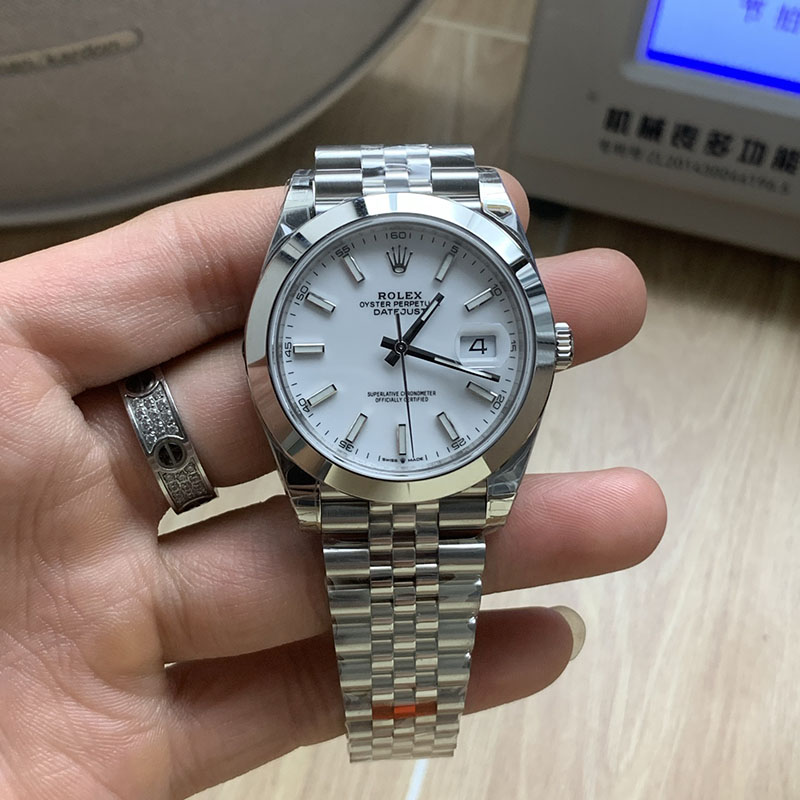
The dial is a faithful recreation of the Daytona design, with three subdials, applied hour markers, and a date window at 3 o'clock. The Super-Luminova lume is applied to the hands and hour markers. After charging under a bright light, the lume glows brightly for about 4-5 hours before fading to a dim blue-green. This is comparable to many entry-level Swiss watches, though the original Daytona uses a proprietary lume that lasts longer. The dial printing is crisp, and the 'Daytona' text is well-centered. One nitpick: the magnification on the date cyclops is slightly weak, making the date harder to read at a glance than a genuine Rolex.
When placed side by side with a genuine steel Daytona, the differences become apparent. The case shape is similar but the lugs are slightly thicker on this replica. The crown guards are also a bit less pronounced. The ceramic bezel insert has a glossy finish that reflects light differently than the original's matte ceramic. The bracelet (not included in this review if you received a strap) is typically a folded link Oyster-style, which feels lighter and less solid than the original's solid links. The clasp is a simple stamped buckle or push-button deployant, lacking the micro-adjustment of the genuine. But for the price difference—$389.99 vs. $14,000+—these compromises are expected.
Given its quartz movement and ceramic case, this Daytona is ideal as a daily beater. The scratch-resistant ceramic ensures the case and bezel stay pristine, and the quartz accuracy means you don't need to reset it after a few days off the wrist. The 43mm size wears large, so it may not suit smaller wrists. The weight is noticeably lighter than steel, which some may find less satisfying but others appreciate for all-day comfort. Water resistance is stated as 50m, but I wouldn't trust it for swimming—better to keep it dry. The crown and pushers screw down, but the gaskets may not be as reliable as a genuine Rolex.
The ceramic case is tough but brittle—it can crack under extreme impact, unlike steel that may dent. The quartz movement requires a battery change every 2-3 years, which is simple and cheap. The mineral crystal (likely) is less scratch-resistant than sapphire, so it may develop micro-scratches over time. For the price, it's a decent trade-off. The movement is a standard Miyota or similar quartz chronograph caliber, which is easy to service if needed.
At this price point, you get a watch that looks the part of a Daytona, with a ceramic case and functional chronograph. The build quality is good for a replica, but it does not match the materials and finishing of a genuine Rolex. If you want the look without the cost and are okay with quartz, this is a viable option. However, if you prioritize mechanical movement or authenticity, you may be disappointed. The comparison to a true Daytona is inevitable—this watch is a homage, not a replica trying to pass as real. For the money, you get a reliable, accurate, and attractive chronograph that will last years with basic care.
In summary, this ROLEX Daytona ceramic case quartz watch offers a compelling alternative for budget-conscious buyers who value style and precision over mechanical heritage. It's a practical choice for everyday wear, but watch enthusiasts seeking the real experience should save for the original.